Strength training is vital for women at every stage of life. It builds muscle, improves bone density, and supports long-term health. Starting in your 30s, women naturally lose 3–8% of muscle mass per decade without resistance training. Tailoring your workout to your age and life stage ensures you stay strong, healthy, and independent.
Key Takeaways:
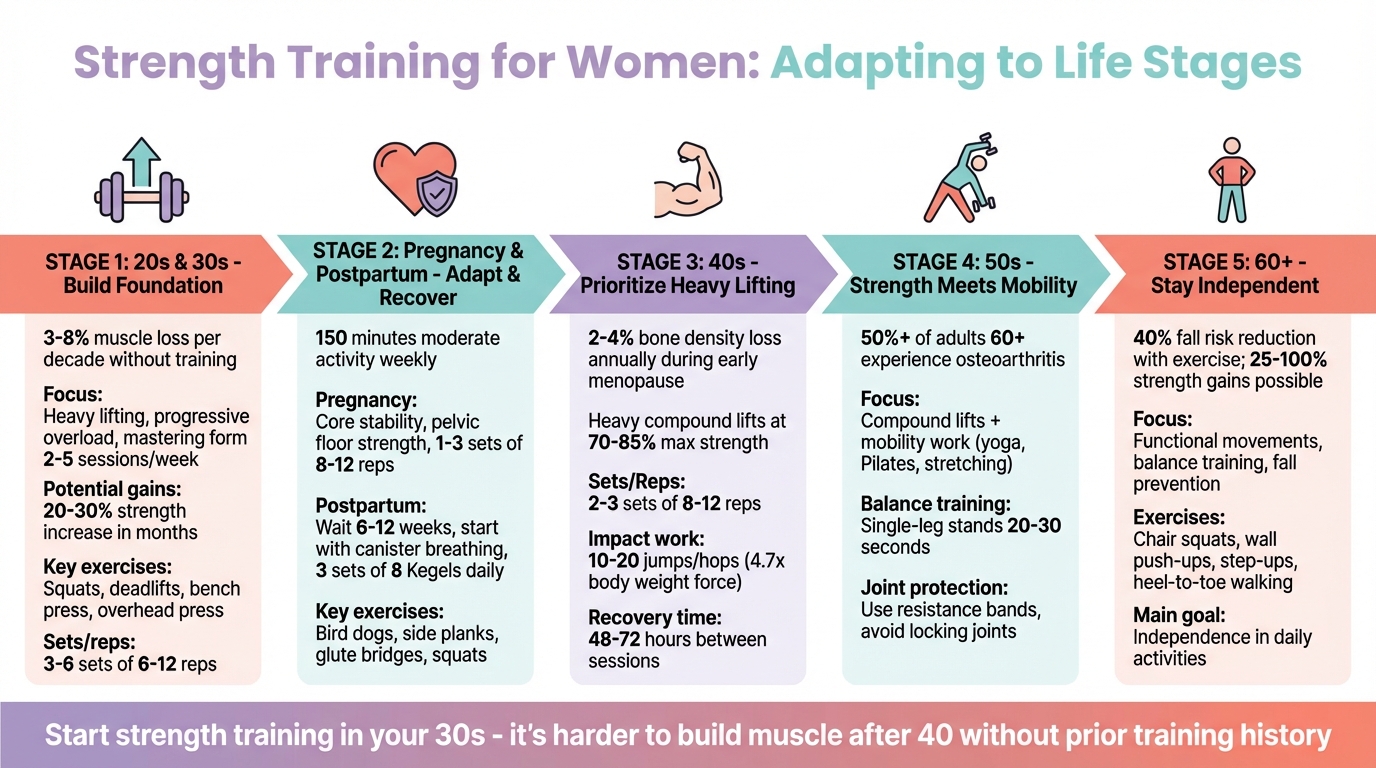
- 20s and 30s: Focus on building muscle and mastering form with heavy lifting and progressive overload.
- Pregnancy/Postpartum: Modify exercises to prioritize core stability, pelvic floor strength, and recovery.
- 40s and 50s: Heavy lifting combats muscle and bone loss due to hormonal changes; mobility work becomes more important.
- 60 and beyond: Emphasize functional movements, balance, and fall prevention to maintain independence.
Strength training isn’t just about looking toned – it’s about staying strong for life. Programs like the Burn App by Cara Loren offer tailored plans for every stage, making it easier to stay consistent and meet your goals.
Strength Training Guide for Women by Life Stage and Age
Women 40+: How to Lift Weights Safely, Stay Strong Through Hormone Changes & Avoid Getting ‘Bulky’
Strength Training in Your 20s and 30s
Your 20s and 30s are prime years for building muscle. Thanks to quicker recovery times and favorable hormone levels, this is the perfect stage to lay a solid foundation that can help counteract muscle loss as you age.
Training Focus for Your 20s and 30s
During your 20s, the focus should be on mastering proper form and building muscle. Your body is well-equipped to handle both heavy lifting and hypertrophy (muscle growth) training, making it an ideal time to steadily increase strength. Stacy Sims, PhD, explains:
"In your earlier reproductive years, it doesn’t matter what kind of training you’re doing, you can do some heavy lifting, some hypertrophy training, or a combination of the two. You just really need to keep building that muscle and stay strong."
By the time you enter your 30s, the stakes increase. Sims emphasizes the importance of starting resistance training early:
"If you get into your 40s and you don’t have a history of resistance training, it’s really difficult to build muscle mass. Operation build mass begins now [in your 30s]."
While recovery may begin to slow slightly in your 30s, this decade remains an excellent time to make significant gains. Aim for 2 to 5 strength training sessions per week. With consistent effort, you could see a 20% to 30% increase in strength within just a few months. If you track your menstrual cycle, try scheduling your heaviest lifts during the first two weeks, when your body is better primed for muscle growth. In the latter half, scale back the intensity slightly as recovery may take a bit longer.
The principle of progressive overload is essential – gradually increase the weight you lift over time. Once you can complete all sets at a certain weight with ease, increase the load by about 5%. For muscle growth, aim for 3 to 6 sets of 6 to 12 reps, with 30 to 90 seconds of rest between sets. If your goal is pure strength, focus on heavier weights with 3 to 6 reps and 2 to 5 minutes of rest between sets. Pair these strategies with compound exercises for maximum results.
Best Exercises for Building Strength
Compound movements are the cornerstone of any effective strength training plan. Exercises like squats, deadlifts, bench presses, and overhead presses work multiple muscle groups simultaneously, making them incredibly efficient. Start your workouts with these high-impact exercises when your energy levels are at their peak. If time allows, you can add isolation exercises like biceps curls or lateral raises to round out your routine.
Even if you’re training at home, you can still build strength effectively. Modified pushups against a wall or countertop target your chest and arms, while chair squats engage your lower body. Household items, like water bottles or backpacks, can double as weights. Focus on slow, controlled movements to maximize muscle activation. Whether you’re working out at the gym or in your living room, the key is to challenge your muscles consistently and track your progress. The strength you build now will serve you well for years to come.
Strength Training During Pregnancy and Postpartum
Pregnancy and the postpartum period call for thoughtful adjustments to your fitness routine to maintain strength and support your changing body. The American College of Obstetricians and Gynecologists emphasizes that, "In the absence of obstetric or medical complications or contraindications, physical activity in pregnancy is safe and desirable". The focus during this time is on staying strong while adapting to the unique demands of each stage.
Safe Pregnancy Modifications
For uncomplicated pregnancies, aim for 150 minutes of moderate activity weekly, incorporating muscle-strengthening exercises at least two days a week. Resistance training can include 1 to 3 sets of 8 to 12 repetitions using free weights, machines, or resistance bands, performed twice a week.
Adjust your workouts as your pregnancy progresses. During the first trimester, stay hydrated and reduce workout intensity to manage fatigue, as maintaining a safe core temperature is vital for early fetal development. In the second trimester, avoid exercises that require lying flat on your back after 16 to 20 weeks to ensure proper blood flow to the baby; incline variations are a better choice. By the third trimester, modify your stance – such as using a sumo position for squats or deadlifts – to account for your shifting center of gravity.
Use the talk test to gauge intensity: if you’re unable to carry on a conversation while exercising, it’s time to scale back. Pregnancy hormones like relaxin can loosen joints and ligaments, so prioritize controlled movements and core stability exercises such as bird dogs, side planks, and diaphragmatic breathing to support your spine. Starting pelvic floor exercises early can help reduce the risk of urinary incontinence by 17%.
Stop exercising immediately if you notice warning signs like vaginal bleeding, painful contractions, amniotic fluid leakage, dizziness, headache, chest pain, or calf swelling. Once pregnancy concludes, the focus shifts to safe recovery and rebuilding strength postpartum.
Postpartum Recovery and Rebuilding Strength
Postpartum recovery builds on the adjustments made during pregnancy, with an emphasis on reconnecting with your core strength and gradually restoring function. Recovery timelines vary depending on your delivery. After an uncomplicated vaginal birth, light activities like walking can typically begin within days. For cesarean births, it’s recommended to wait at least six weeks before resuming resistance training. Physical therapist Laura Ward offers this insight:
"Technically you’ll be cleared to return to exercises by your OB-GYN or midwife six to eight weeks postpartum… but depending on your delivery and previous fitness levels it may be better to wait until around 12 weeks when your tissue is 100% healed."
Start by reconnecting with your core and pelvic floor through the canister position – a technique that synchronizes diaphragmatic breathing with pelvic floor activation. To practice, inhale slowly through your nose, letting your stomach expand, then exhale through pursed lips while tightening your abdominal muscles. Add 3 sets of 8 Kegel squeezes daily, mixing quick squeezes with slow 10-second holds.
From there, gradually reintroduce strength-building exercises. Begin with glute bridges to stabilize your pelvic floor, bird dogs for core control, and functional movements like squats and seated rows. Use the drawing-in maneuver – engaging your abdominal wall muscles – to help address diastasis recti. Avoid exercises that result in abdominal "doming", pelvic pain, or urinary leakage, as these are signs your core isn’t ready for that level of activity. With steady progress, you can start regaining strength within 4 to 8 weeks, though full tissue healing typically takes about 12 weeks.
As you enter your 40s and beyond, your body begins to face new physical challenges. Hormonal changes, loss of bone density, and reduced muscle mass become more pronounced, making it essential to adapt your fitness routine. Strength training, in particular, plays a key role during this time, helping to maintain independence, reduce the risk of injuries, and build resilience for the years ahead. This guide breaks down exercises and recovery strategies tailored to the evolving needs of your 40s, 50s, and beyond.
Your 40s: Prioritize Heavy Lifting
In your 40s, hormonal shifts, including the onset of perimenopause, bring a noticeable decline in estrogen and progesterone levels. This accelerates muscle loss and reduces bone density by 2% to 4% annually during early menopause. To counteract these changes, focus on heavy, compound lifts that target multiple muscle groups and stimulate bone strength.
Dr. Stacy Sims, a leading expert in female physiology, explains:
"Lifting heavy and doing high-intensity work gives the body the stress that those hormones provide as well."
Incorporate exercises like squats, lunges, deadlifts, presses, and rows, aiming for 2–3 sets of 8–12 reps at 70–85% of your maximum strength. These movements help build both muscle and bone density. To further promote bone formation, include weight-bearing impact exercises, such as 10–20 jumps or hops. For example, a vertical jump can generate a force of about 4.7 times your body weight, while a heel drop produces roughly 3.6 times your body weight.
Recovery is equally important. Allow 48 to 72 hours between intense sessions to let your muscles repair and rebuild. If you’re tracking your cycle, schedule your heaviest lifts during the follicular phase (the first 14 days) to optimize muscle gains. As you transition into your 50s, adding mobility work becomes increasingly important to adapt to additional hormonal changes.
sbb-itb-fc9c16c
Your 50s: Strength Meets Mobility
By the time you reach your 50s, the drop in estrogen not only impacts bone density but also affects joint lubrication and can increase inflammation. More than 50% of Americans aged 60 or older experience osteoarthritis symptoms like stiffness and soreness. At this stage, combining strength training with mobility exercises becomes essential for maintaining functionality and reducing the risk of injury.
Continue to prioritize compound lifts, such as squats, deadlifts, bench presses, and rows, to preserve muscle mass and keep your metabolism active. These exercises also help counteract the fat gain that often accompanies menopause. Additionally, resistance training has been shown to lower inflammatory responses, which can benefit heart health. Pair your strength routine with mobility practices like yoga, Pilates, dynamic stretching, or foam rolling to maintain joint flexibility. If arthritis limits your grip strength, resistance bands can be a joint-friendly alternative.
Balance exercises, such as single-leg stands for 20–30 seconds, can help strengthen stabilizing muscles around the hips, knees, and ankles. Adjust exercises as needed – box squats can accommodate tight hips, while wall push-ups are helpful for those with limited shoulder mobility. To protect your joints, avoid fully locking them out during repetitions, keeping constant tension on your muscles.
Building a solid foundation of strength and mobility in your 50s sets the stage for maintaining independence as you move into your 60s and beyond.
60 and Beyond: Staying Independent
After 60, your fitness priorities shift toward maintaining independence and preventing falls. With declining bone density and reduced neuromuscular connections, the risk of fall-related fractures increases. However, regular exercise can reduce this risk by about 40% in adults aged 50 and over. Strength training remains highly effective, with adults aged 65 or older able to increase their strength by 25% to over 100% through consistent effort.
Begin with simple, functional movements such as chair squats, wall push-ups, step-ups, and resistance band rows. These exercises build strength for everyday tasks like climbing stairs, carrying groceries, or standing up from a chair. Dedicate time to balance training with activities like single-leg stands, heel-to-toe walking, or using a balance board. These practices improve your body’s ability to maintain stability and avoid falls.
As fitness coach Kate Rowe-Ham, founder of Owning Your Menopause, puts it:
"Strength training in your 40s isn’t about chasing the body you had at 30; it’s about building the body you want to live in for the next 30 years: strong, capable, independent, and resilient."
This perspective serves as a powerful reminder that each decade offers a chance to invest in your health and enhance your quality of life for the future.
Using Burn App by Cara Loren for Every Life Stage

The Burn App is designed to provide women with strength training programs tailored to their specific life stages. Whether you’re in your 20s, navigating pregnancy, recovering postpartum, or working toward long-term fitness goals, this app offers structured plans to meet your needs. Let’s dive into how its programs cater to different phases of life.
Prenatal and Postpartum Programs
For expectant mothers, the Burn App offers a 24-week prenatal program (covering weeks 13–36) that prioritizes pelvic floor strength, core stability, and 360 breathing techniques. These exercises are designed to help manage diastasis recti and prepare the body for labor.
Once your baby arrives, the app transitions you into its 8-week postpartum "Restore" program. This plan focuses on gentle, restorative exercises aimed at rebuilding pelvic floor and core strength. From there, it gradually reintroduces more intense workouts, helping you ease back into regular fitness routines with care.
Quick Workouts for Busy Lives
Life can get hectic, but the Burn App makes it easier to stay active with 30+ quick workout options. These sessions are perfect for busy schedules, whether you’re juggling work, parenting, or both. Options include HIIT, circuit training, and strength-building exercises, all designed to fit into short time frames. Plus, you can choose to work out at home or in the gym, giving you the flexibility to train wherever feels most convenient.
Long-Term Progress with Burn App by Cara Loren
The app’s progressive overload feature automatically adjusts resistance and intensity as your strength improves, making sure you continue to see results without the hassle of manually planning your progress. With tools like progress tracking, detailed video demonstrations, and muscle-targeting visuals, you can monitor your development and understand exactly how your body is changing. This thoughtful approach supports building a strong, capable body that will serve you well for years to come.
Conclusion
Strength training isn’t one-size-fits-all – it’s something that should change and grow with you. Starting around age 30, women naturally begin to lose lean muscle if resistance training isn’t part of their routine. Add to that the physical demands of pregnancy, hormonal changes during perimenopause, and the aging process, and it’s clear why sticking to the same workout plan forever just doesn’t work.
Your training should reflect where you are in life. In your 20s and 30s, you’re laying the groundwork for long-term strength. During pregnancy and postpartum, the focus shifts to protecting your core and maintaining overall strength. By your 40s and beyond, it’s about maintaining bone density and staying strong for everyday activities. Physical therapist Sarah Cash Crawford sums it up perfectly:
"It’s really about building a strong foundation so you can move with confidence and ease at every stage of life".
The beauty of strength training is that it works at any age. For example, adults 65 and older can see strength gains of 25% to over 100% with consistent resistance training. Even small, regular efforts can make a big difference in how long and how well you live.
The right program makes adapting your routine easier to manage. Tools like the Burn App by Cara Loren offer tailored options for every stage of life, from prenatal and postpartum programs to quick, efficient workouts for hectic schedules. With features like progressive overload that adjusts as you grow stronger, you can stay consistent, whether you’re exercising at home or at the gym. These options help you maintain strength while keeping up with life’s changes.
Your body is capable of incredible things at every age. By adjusting your strength training to fit your current lifestyle, you can build lasting strength that supports you in everything you do.
FAQs
How can I safely adjust my strength training routine during pregnancy?
Strength training during pregnancy is an excellent way to stay active, but it’s crucial to adjust your routine to suit your body’s changing needs. Start by consulting your healthcare provider to confirm that exercise is safe for you. When working out, aim for a moderate intensity – if you can carry on a conversation while exercising, you’re likely in the right zone. Begin each session with a 5–10 minute warm-up, such as light walking or dynamic stretches, and wrap up with gentle stretching to cool down.
Choose controlled, low-impact exercises like goblet squats, seated rows, or modified lunges. Instead of heavy weights, opt for lighter dumbbells (around 5–10 lbs) or resistance bands. After your first trimester, avoid lying flat on your back; instead, use a slight incline or perform exercises while seated or standing. To support your pelvic floor and maintain good posture, include core-strengthening moves like bird dogs or dead bugs. Aim for 2–3 strength training sessions per week, each lasting 20–30 minutes, and complement these with low-impact cardio activities like walking or swimming on alternate days.
For a more guided routine, the Burn App by Cara Loren offers prenatal workout plans tailored to fit busy schedules. These plans feature scalable exercises, video tutorials, and tools to track your progress, making it easier to stay consistent and prepare your body for postpartum recovery.
What are the best exercises for women in their 40s to support bone health?
Maintaining strong bones in your 40s is essential, and adding weight-bearing exercises and strength training to your routine can make a big difference. Activities like walking, jogging, hiking, dancing, stair climbing, or even sports like tennis and pickleball are great for engaging your bones and improving strength.
To complement these, include resistance exercises that focus on key areas like the spine and hips. Moves such as squats, lunges, deadlifts, and overhead presses (using dumbbells or a barbell) are particularly effective for supporting bone health and fighting age-related bone loss. Aiming for 3–4 sessions per week with a mix of cardio and strength exercises is a solid approach.
If you’re looking for guidance, the Burn App by Cara Loren provides tailored programs like “Bone-Boost” and “Strength for Moms.” These programs combine weight-bearing activities with strength training, offering video tutorials and progress tracking to help you stay consistent – even when life gets hectic.
How should women over 60 approach strength training?
For women over 60, strength training becomes less about heavy lifting and more about maintaining muscle mass, boosting metabolic health, and ensuring independence in daily life. Resistance exercises play a key role in countering age-related muscle loss (sarcopenia), making everyday tasks easier and helping sustain energy levels. Even light strength training can have big benefits, like improving blood sugar management and lowering the risk of type 2 diabetes.
The focus should be on exercises that are gentle on the joints but effective. Movements such as squats, wall push-ups, and seated rows are excellent choices. You don’t need heavy weights to see results – body weight, resistance bands, or light dumbbells (5–10 lbs) used twice a week is a solid starting point. Prioritize good form, slow and controlled motions, and gradually increase resistance to minimize injury risk. Adding balance exercises, like single-leg stands, is also a smart way to reduce the chance of falls.
For a guided approach, the Burn App by Cara Loren offers strength programs specifically designed for women over 60. These short, easy-to-follow sessions can be done at home or in the gym. With an emphasis on progressive overload and safe techniques, the app makes it simple to stay active and build strength at any stage of life.